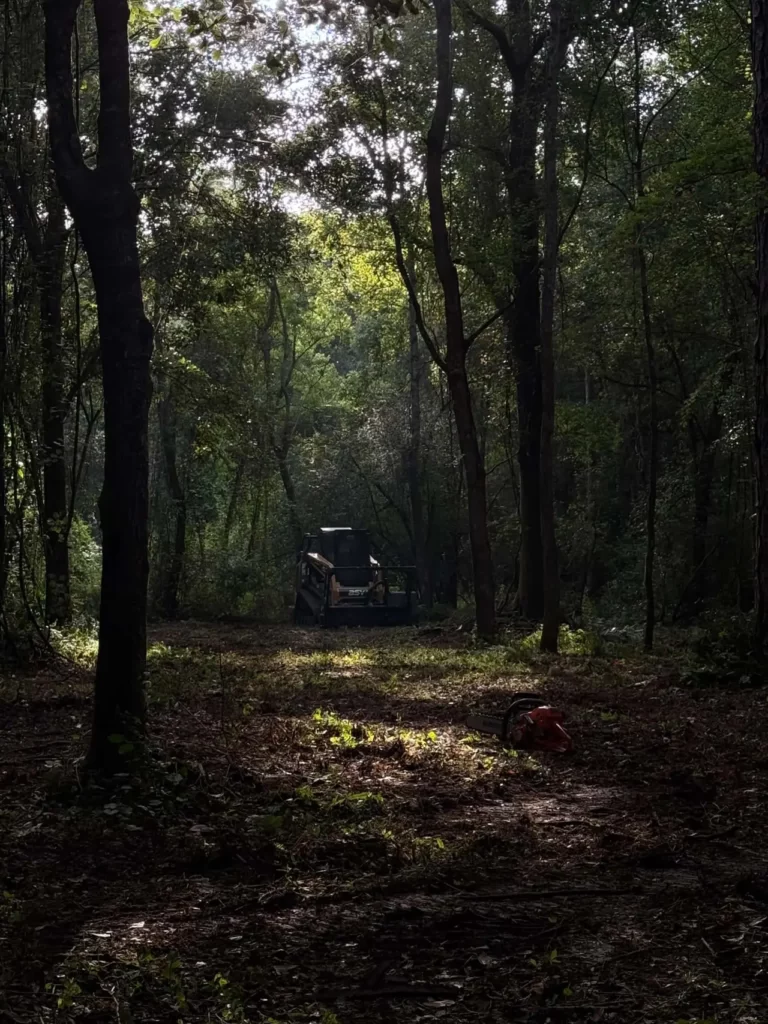
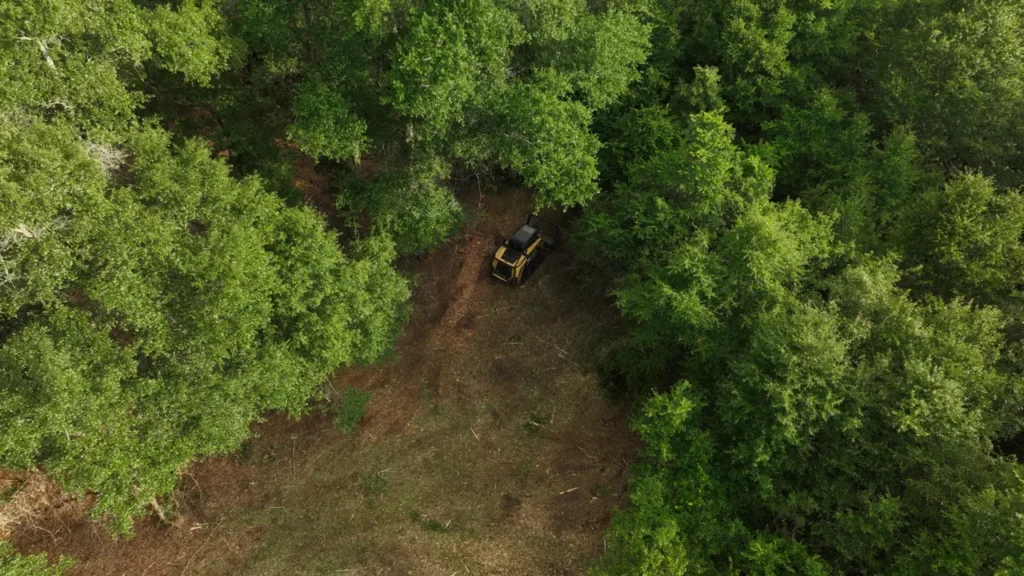
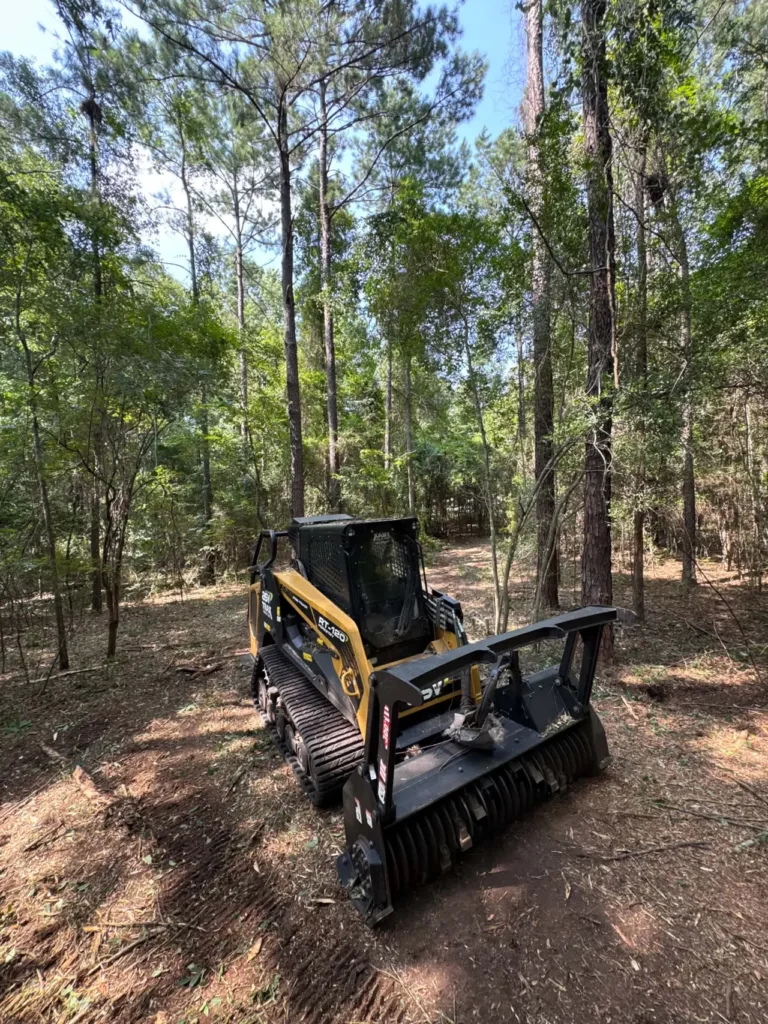
ATV and walking trails, camp roads, logging road maintenance and access cuts to landlocked ground. If you can’t get to it, you don’t really own it.
ATV and UTV trails through timber and scrub.
narrower, and gentler on the ground.
Camp roads wide enough for a truck and a trailer, reopened after a season of growth or cut fresh.
existing roads that have closed in.
where you hold the easement.
which double as firebreaks.
| Width | What it carries | Note |
|---|---|---|
| 6-8 ft | ATV, UTV, walking | Cheapest. Closes in fastest. |
| 10-12 ft | Truck, small trailer | The usual camp road. |
| 12-15 ft | Truck and equipment trailer, machinery | Also works as a firebreak. Best value if you want both. |
The commonest regret on this work is cutting a six-foot trail and then wanting to get a truck and a trailer down it eighteen months later. Widening later costs more than cutting wide once, because the machine has to come back.
We cut and clear the corridor, and we can shape the surface with the excavator so it drains rather than holding water down the middle. What we don’t do is cut ditches, install culverts or build drainage structures, if your road crosses a wet-weather branch or needs a proper crossing, that’s a separate contractor and we’ll say so.
If the road needs a hard surface, we can spread base rock you’ve had delivered, see fill, topsoil and gravel. We don’t supply or haul the material.

Camp roads and interior access are best done June to July, alongside lanes and plots and firebreaks. Bundling the whole tract into one two-day visit costs substantially less than four separate call-outs, and on ground that’s an hour from base the mobilisation is a real part of the bill.
If a trail runs near a property line, know where the line is first. We cut where you tell us to cut. See survey line clearing.
Ten to twelve feet if a truck is going down it, twelve to fifteen if you’re pulling an equipment trailer or want it to work as a firebreak too. Six to eight is fine for ATVs and nothing else.
Not on its own. In this climate a cut trail closes in within a couple of seasons. An annual light pass keeps it open and costs a fraction of cutting it again.
We can shape it so it sheds water rather than holding it, and spread rock you’ve had delivered. Culverts, ditches and proper crossings are a different contractor.
No. Crossing regulated wetland or a defined channel is a federal matter and needs authorisation that neither of us should be guessing at. We’ll flag it before we quote.
Call and you get John Williams, not an answering service and not a dispatcher. If it’s after hours or a Sunday, send the form and you’ll have a text back and a callback first thing.