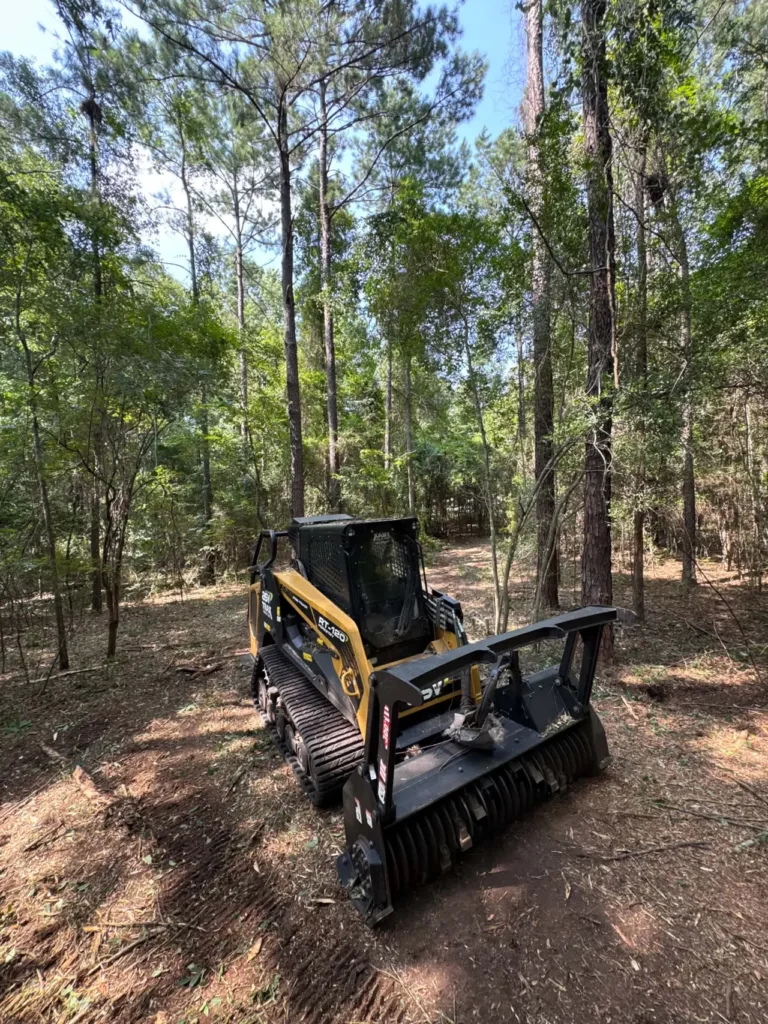
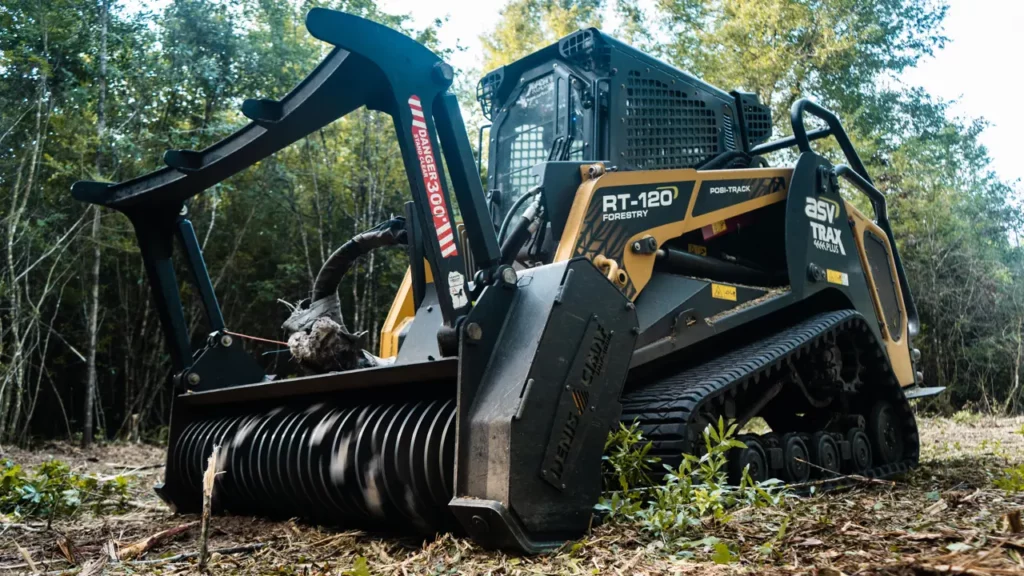
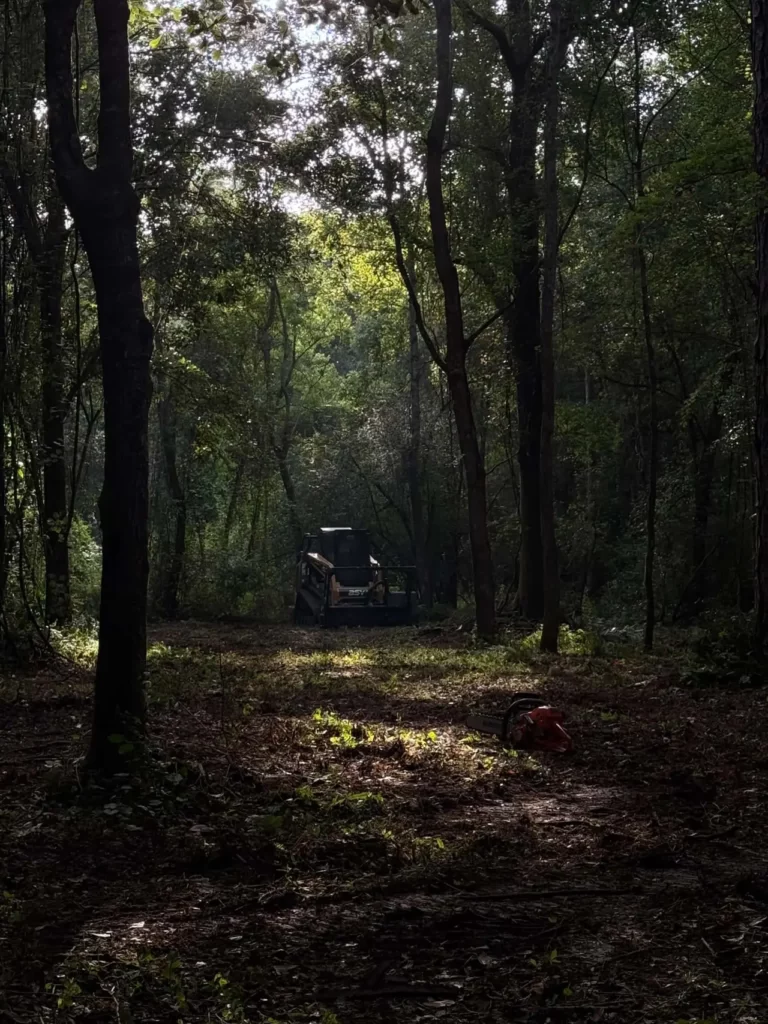
A break in the fuel between a fire and the thing you don’t want burnt, your timber stand, your house, your equipment shed, your neighbour’s line.
A strip where the fuel has been removed or reduced, so a ground fire runs out of anything to burn. Depending on the job that means down to mineral soil, or reduced to a mulched layer that won’t carry flame the way standing brush does.
It is not a guarantee. A crown fire in wind will cross a plowed line without slowing down. What a break does is stop a ground fire, give suppression crews an anchor point to work from, and give you a road to get equipment in on.
House, barn, shop, equipment shed. Combined with keeping the ground immediately around the building clear, this is the highest-value break on most properties.
Particularly young pine plantation, which is the most vulnerable thing on most timberland in this region.
Works in both directions and does the neighbour a favour too.
If you’re burning under a plan, the lines go in first.
Doubling as access.
Ten feet is a minimum that works against a light ground fire. Twenty to thirty feet is a serious break and is what most foresters want around a stand. Wider costs more and works better, and we’ll tell you what we think the terrain needs rather than selling you the widest line we can bill for.
Talk to the Alabama Forestry Commission before you do anything. Prescribed burning in Alabama has notification requirements, and burning under a certified plan protects you in ways that burning without one does not. We cut lines; we do not burn, and we’re not advising on whether or when you should.
A break grows back. In this climate, a line cut to mineral soil will have vegetation on it within a season. An annual light maintenance pass before the dry season keeps it working and costs a fraction of cutting it again. Ask us to put you on the reminder list.
Ten feet minimum against light ground fire, twenty to thirty for a stand break. Terrain, fuel load and what you’re protecting all move that. If you have a consulting forester, use their number.
Generally no on your own land, but wetlands, protected species habitat and any conservation easement or cost-share agreement over the property can all change that. If your land is in a forestry program, check the agreement first.
It will stop or slow a ground fire and give crews something to work from. It will not stop a wind-driven crown fire. Anyone telling you otherwise is selling something.
Frequently, and it’s the sensible way to plan them. A twelve to fifteen foot break maintained annually is also an access road for a truck or an ATV.
Call and you get John Williams, not an answering service and not a dispatcher. If it’s after hours or a Sunday, send the form and you’ll have a text back and a callback first thing.