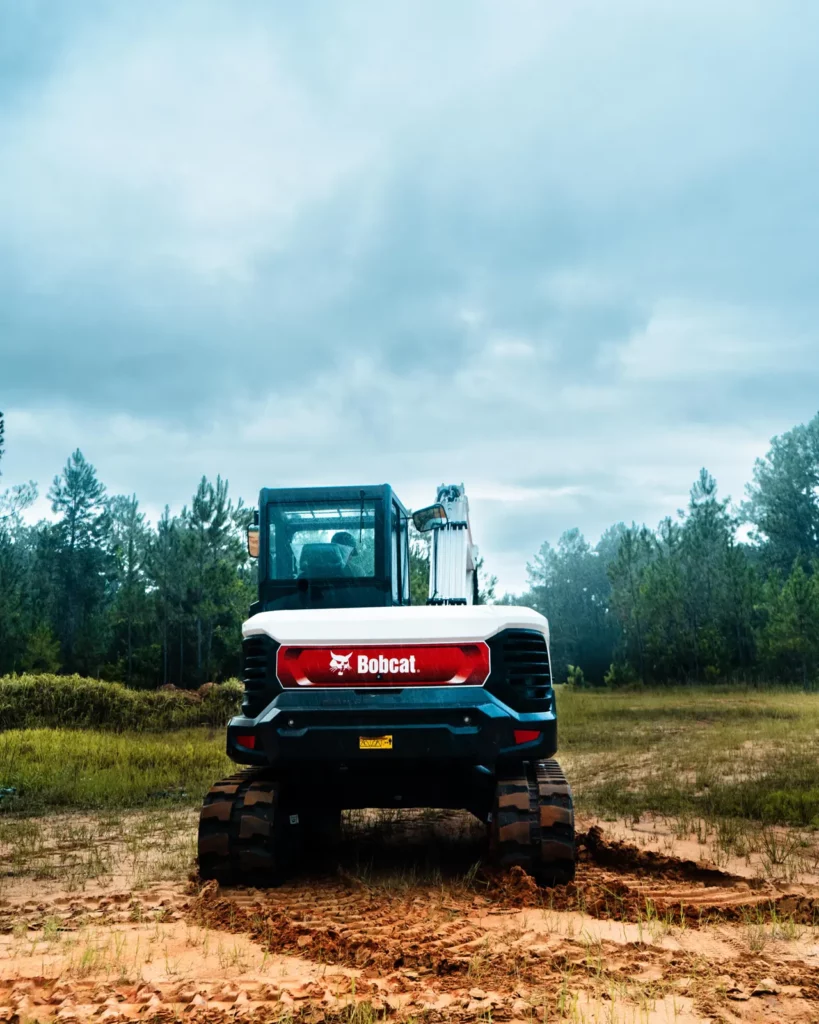
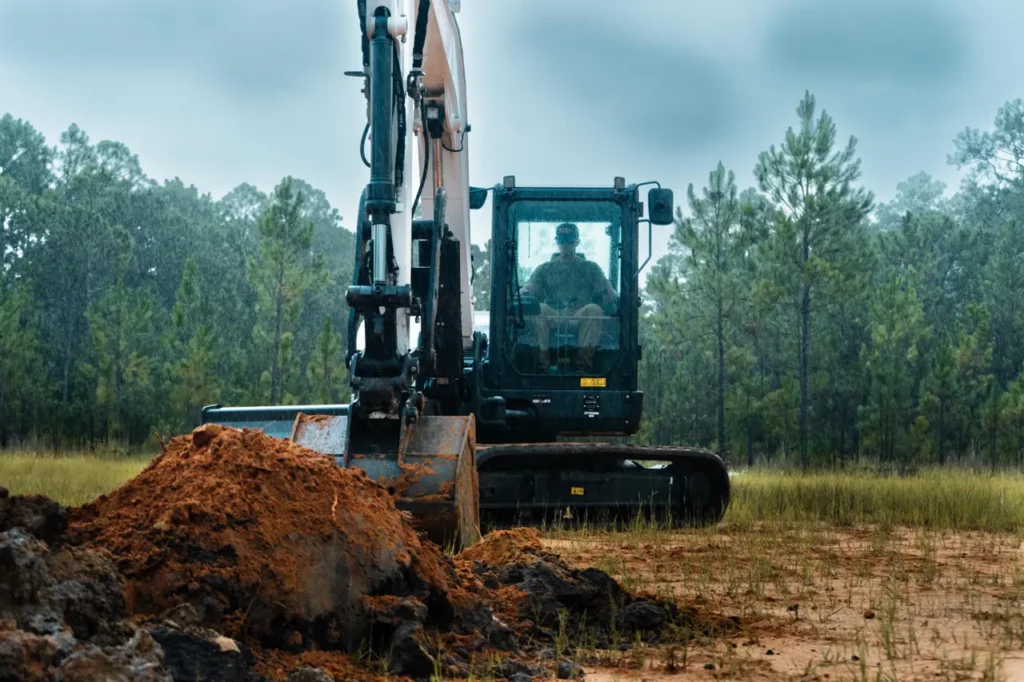
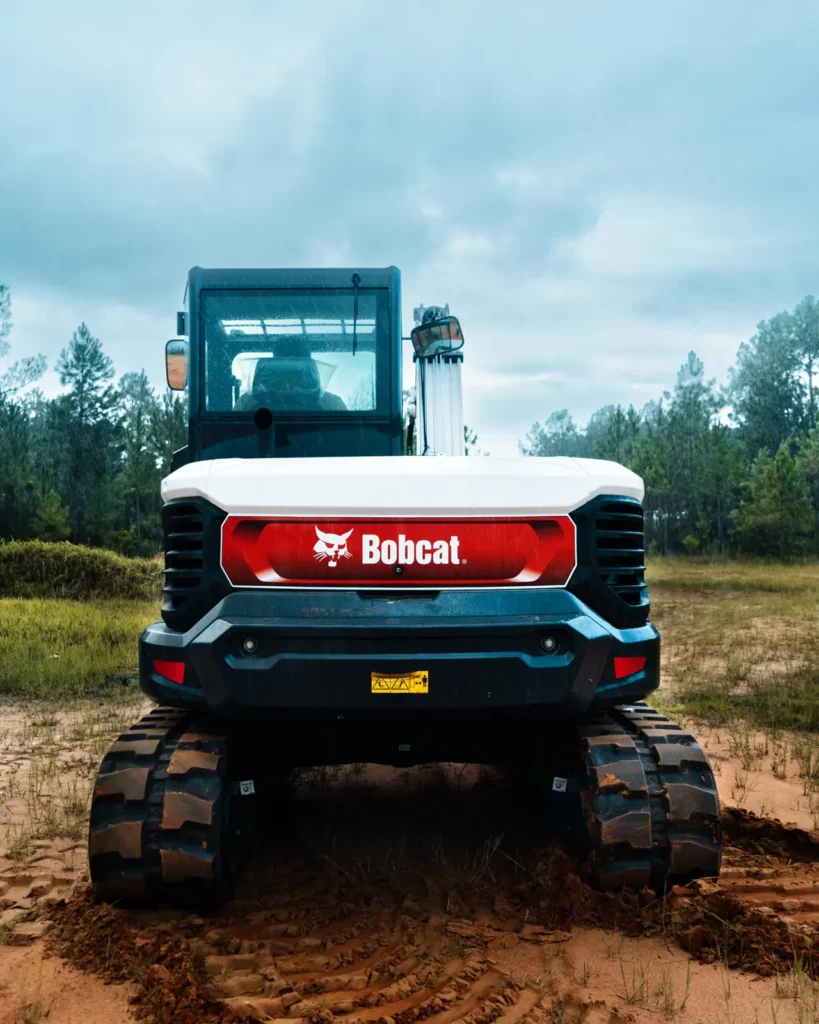
New drives cut into wooded or overgrown property, and existing ones reshaped when they’ve rutted, washed or grown in.
Job spec
Getting in and out
Priced by
Length, slope and what's in the way
New cut or reshape
$1,200-$3,500
Machines
ASV RT-120 · Bobcat E88
New cut
Cleared, shaped and crowned
Existing drive
Reshaped, ruts and washouts taken out
Rock
We spread what you have delivered
We do not offer
Culvert installation, ditching, paving
Minimum job
$1,000
New drives
Cutting access into a wooded or overgrown parcel is often the first thing that has to happen, before the survey, before the build, sometimes before anybody can properly look at what they’ve bought. It’s also the part people forget to budget for.
Clear the corridor to the width you need, allowing for the vehicles that will actually use it.
Take the stumps and plates out of the running surface, mulched stumps at ground level will come through a gravel drive.
Shape and crown it so water runs off the sides rather than down the middle.
Cut the approach where it meets the road.
Spread base rock you've had delivered, if that's part of the job.
Existing drives
Rutted, washed, potholed or closing in with growth. Reshaping an existing drive is considerably cheaper than cutting a new one, and doing it before the base is destroyed is cheaper still.
If it's washing out, the crown is the problem.
A drive that holds water down the middle destroys itself, and adding rock to a flat drive just buries the problem for one season. The fix is shape, crowning it so water sheds sideways. That’s most of what regrading actually is.
What we don't do
Culvert installation.
If your approach needs a pipe under it, that’s another contractor and often a permit from the road authority.
Ditching and drainage.
Supplying or hauling rock.
Order it delivered: a materials supplier already running trucks to your area will beat us on price every time. We’ll spread it.
Paving, concrete or asphalt.
Before you cut a new drive
Check the road authority.
A new access onto a county or state road usually needs a permit, and the approach may have to meet a standard.
Know where your line is.
Drives get cut over boundaries more often than you’d think.
Call 811.
Free, required, and a few working days.
Think about the biggest vehicle.
Not your truck: the concrete truck, the well driller, the moving van, the fire truck.
No. We cut, clear and shape. Culvert installation is a separate contractor and the approach may need a permit from whoever owns the road.
Do you supply the gravel?
No. Have it delivered by a materials supplier, they’re already running trucks near you and they’ll be cheaper. We’ll spread and level it.
How wide should a driveway be?
Twelve feet of running surface is a sensible minimum, plus clearance either side and overhead. Think about the largest vehicle that will ever need to reach the house, not the one you drive.
Why does my drive keep washing out?
Almost always because it’s flat or dished rather than crowned, so water runs down it instead of off it. Adding rock to a flat drive is money buried.
Can you do a drive through wet ground?
We can shape it to shed water. We can’t build a crossing over a defined channel or regulated wetland, and we’ll flag it if that’s what your route needs.
Tell us what's on the ground. We'll come look at it.
Call and you get John Williams, not an answering service and not a dispatcher. If it’s after hours or a Sunday, send the form and you’ll have a text back and a callback first thing.