An overgrown fence row shortens the life of the fence. Vines pull wire off posts, saplings grow through it, and you can’t see a break until an animal’s already through it.
This is a real maintenance problem with a real cost attached, and it’s chronically ignored until the fence fails.
Greenbrier, honeysuckle and muscadine put genuine weight on a fence over a few seasons, and the sag doesn’t come back out.
Once a sweetgum has grown around a strand, taking it out means cutting the fence.
Vegetation holds moisture against posts and against the bottom wire. In this climate that shortens post life significantly.
A break inside an overgrown row doesn’t get found until stock is out on the road.
Anything overhanging the line is a future repair bill.
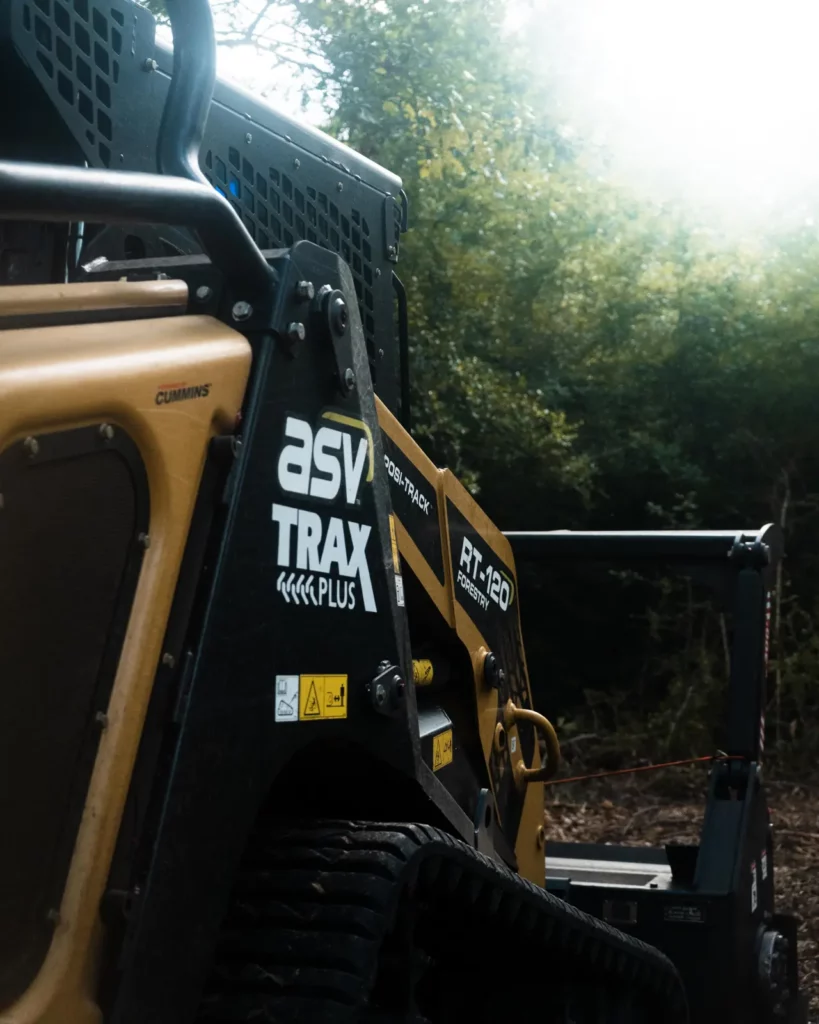
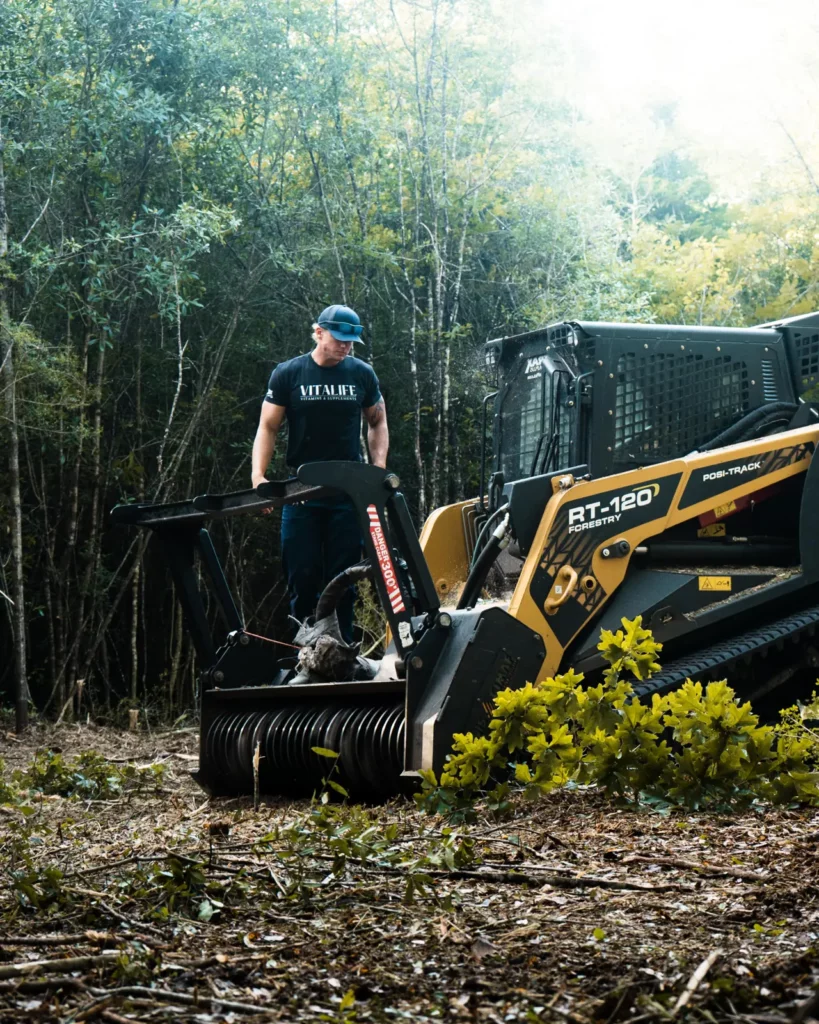
Existing fence. Slower and more careful work, because the object is to open the row without taking your wire out with it. We work to the fence, not through it. Tell us the fence type and age at quote, barbed wire, field fence, high-tensile and board fence all behave differently when there’s a mulcher head six feet away.
New fence line. Faster, because there’s nothing to protect. We cut a corridor to whatever width your fencing contractor wants to work in, usually eight to twelve feet so a post driver and a truck can travel it.

Have the line cleared and the boundary confirmed before your fencing contractor arrives. A fence crew waiting on a cleared corridor is expensive, and a fence built on a line nobody verified is considerably more expensive. See survey line clearing.
That’s the job, and it’s why it costs more per foot than open ground. Older barbed wire is the hardest case because it’s brittle and often part-buried in the row. We’ll tell you honestly at the walk if we think some of it is going to come out either way.
Six to twelve feet is typical. Wider if you want to run a truck or a mower down it, narrower if you’re just opening it for inspection.
We only work ground you control. If the row needs opening from both sides, that’s a conversation with your neighbour before we start, and it’s usually cheaper for both of you to have it done in one visit.
Every two to four years in this climate keeps it a small job. Left ten years, a fence row becomes a clearing job.
Call and you get John Williams, not an answering service and not a dispatcher. If it’s after hours or a Sunday, send the form and you’ll have a text back and a callback first thing.