The ground work, the calendar, and the mistakes that cost people a season.
The commonest mistake on hunting land isn’t placement or sizing. It’s timing. People call in October, by which point the seed window for a fall plot has largely gone and every machine in the county is booked.
| When | What |
|---|---|
| June to July | Firebreaks refreshed. Camp roads reopened after spring growth. Book your ground work now. |
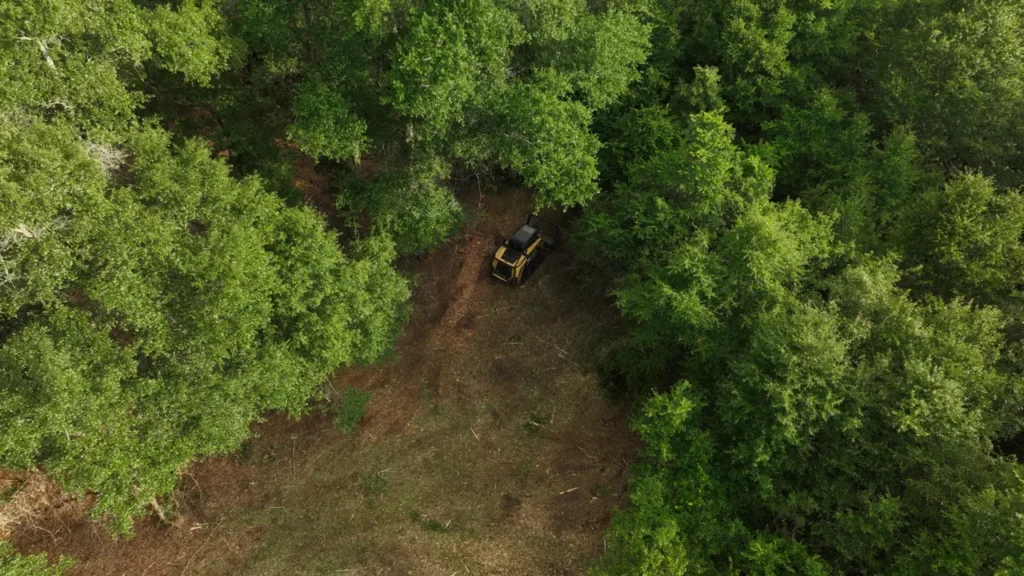
| July to Sept | Lanes cut. Plots cleared, mulched and levelled ready for disc and seed. This is the window. |
| October | Late. Recovery and storm cleanup rather than establishment. |
| Nov to Feb | Best clearing conditions of the year. Boundary and survey lines, larger stand work. |
| Mar to May | Break maintenance, trail passes, general clean-up. |
A break removes the fuel so a ground fire runs out of anything to burn. It won’t stop a wind-driven crown fire, nothing mechanical will, but it will stop or slow a ground fire and give suppression crews an anchor to work from.
Ten feet is a minimum that works against light ground fire.
Twenty to thirty feet is a serious stand break and what most foresters want around young pine.
A twelve to fifteen foot break maintained annually is also access for a truck or an ATV.
Priority order: around structures first, then young plantation, then property lines.
Refresh annually before the dry season, a light pass, at a fraction of the original cost.
Talk to the Alabama Forestry Commission before anything else. Prescribed burning in Alabama has notification requirements and burning under a certified plan protects you in ways that burning without one does not. We cut lines. We don’t burn, and we’re not the people to advise you on whether or when you should.
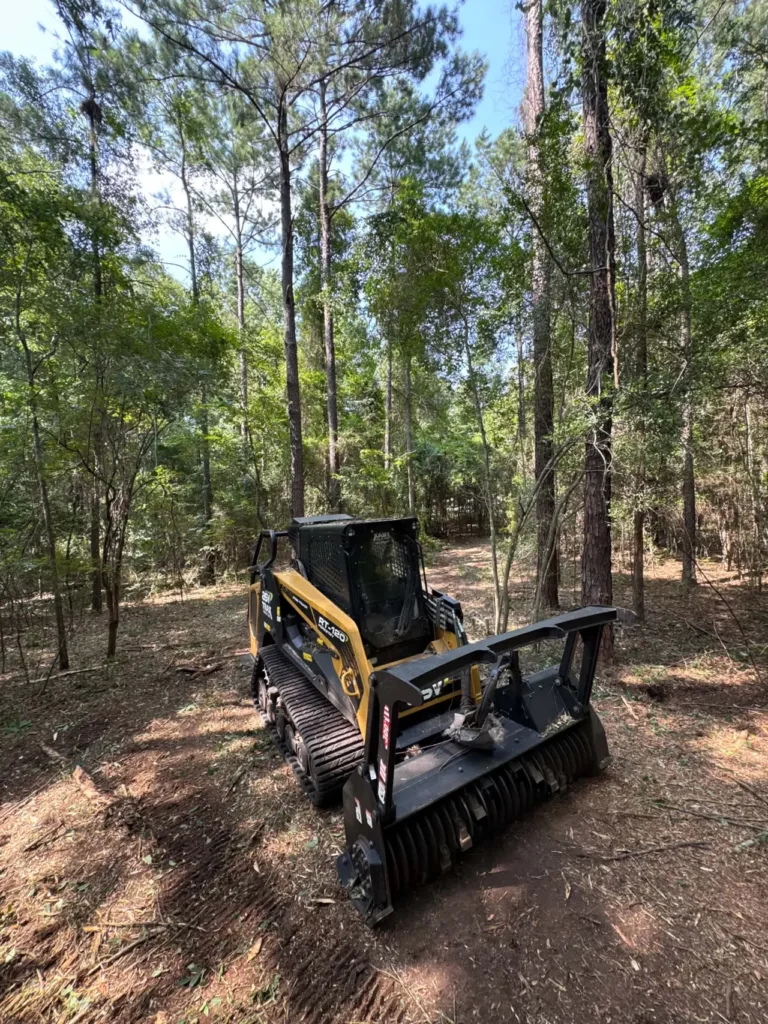
We clear, mulch and level the plot and leave it ready for a disc and a seeder. What goes in and when is a question for your seed supplier or Alabama Extension, we’re clearing contractors, not agronomists, and we’d rather say so than guess at your soil.

Long and narrow with cover at both ends generally outperforms a square in the open.
Half an acre to two acres is the usual range around here.
If you can’t reach the stand without crossing the plot, the plot is in the wrong place.
A plot bordered by thick cover works harder than one in the middle of open timber.
A plot that holds water in January is a mudhole, not a plot.
Get a soil test. Coastal plain soils in this region are typically acidic, and lime is far cheaper than a failed plot. Alabama Extension runs soil testing and it costs very little.
Most tracts in north Mobile County are forty-five minutes to an hour out. Lanes, two plots, a break and the camp road done in one two-day visit costs substantially less than four separate call-outs. More on timberland work →
Call and you get John Williams, not an answering service and not a dispatcher. If it’s after hours or a Sunday, send the form and you’ll have a text back and a callback first thing.