
Four species have taken over an enormous amount of unmaintained land on this coast. Mechanical removal knocks them back hard, and here’s the honest part about what happens next.
| Species | What it does | What we do about it |
|---|---|---|
| Chinese privet | The single most common thing choking unmaintained land on this coast. Forms a dense, continuous understory that shades out everything native and makes ground genuinely impassable. | Mulched in place. It stump-sprouts hard, so expect regrowth and plan a follow-up. |
| Chinese tallow (popcorn tree) | Spreads fast along roadsides, ditch banks and disturbed ground. Seeds prolifically and tolerates wet feet, which is why it does so well down here. | Mulched. Larger stems felled first. Root-sprouts aggressively: follow-up matters more with tallow than almost anything else. |
| Kudzu | Smothers everything it reaches, including standing trees. The visible vine is a fraction of what’s in the ground. | Mulched down to knock back the top growth. The crowns survive, so this is suppression, not eradication, be clear-eyed about that. |
| Cogongrass | A serious problem across south Alabama and the Gulf Coast. Burns hot enough to change fire behaviour and takes over pasture and roadside completely. | Mechanical work alone will not eradicate cogongrass and can spread it if the rhizomes are moved. Talk to Alabama Extension or the Forestry Commission before anyone works it. |
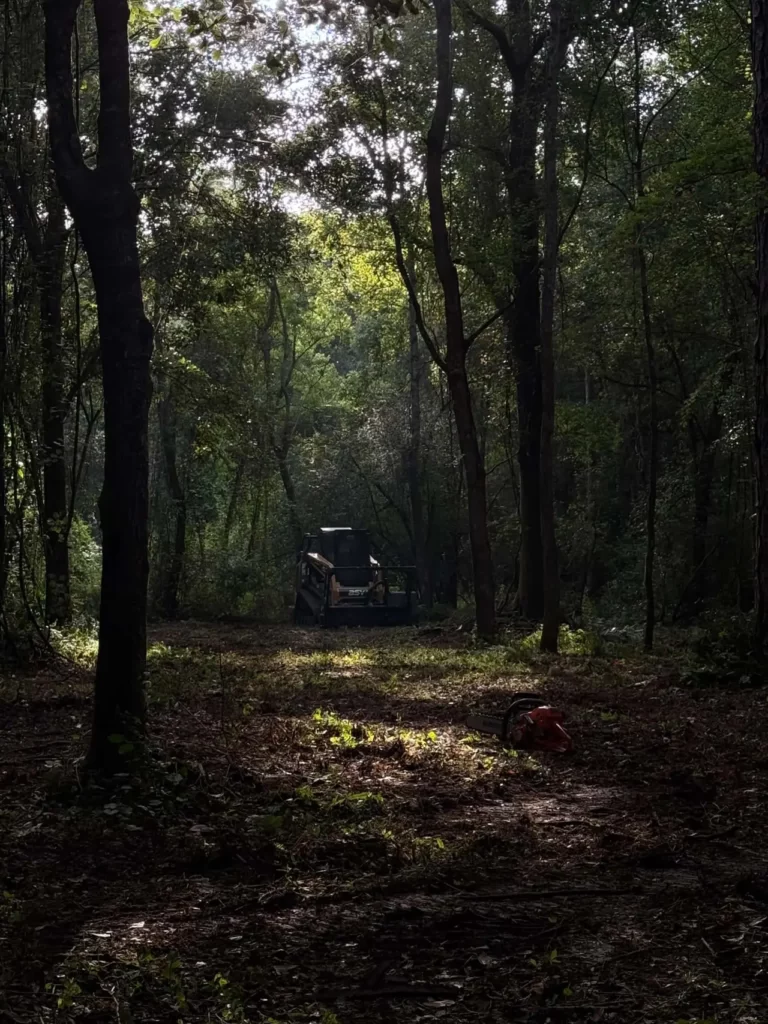
Every one of these species regenerates from roots, crowns or rhizomes that a mulching head does not reach. What a machine does is take out the standing biomass, make the ground usable again, and give you a manageable starting point. What it does not do is kill the plant permanently. Any contractor telling you one pass solves it is selling you something.
Mechanical removal followed by a herbicide program, timed to the species, applied by a licensed applicator. We don’t apply herbicide, it’s licensed work and we’re not licensed for it. What we do is the mechanical half, and we’ll tell you honestly that it’s half.
For cogongrass in particular, talk to Alabama Extension or the Alabama Forestry Commission before any machine touches it. Both publish regional guidance, both are free, and moving rhizomes around with equipment can make the problem substantially worse.
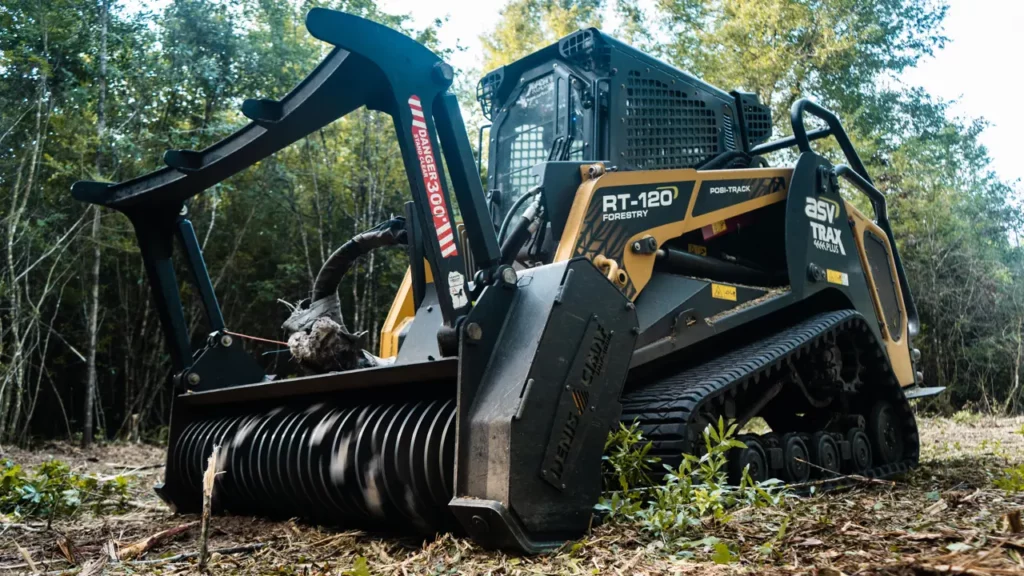
Because these species grow thick. A continuous privet understory with greenbrier through it is the slowest material we work, well under an acre a day. That’s not a premium for the word invasive, it’s the actual production rate.
Expect to re-cut at twelve to eighteen months, and expect it to cost a fraction of the first pass. Ground kept on a cycle stays cheap. Ground left for another decade becomes a reclamation job again. Ask us to put you on the reminder list.
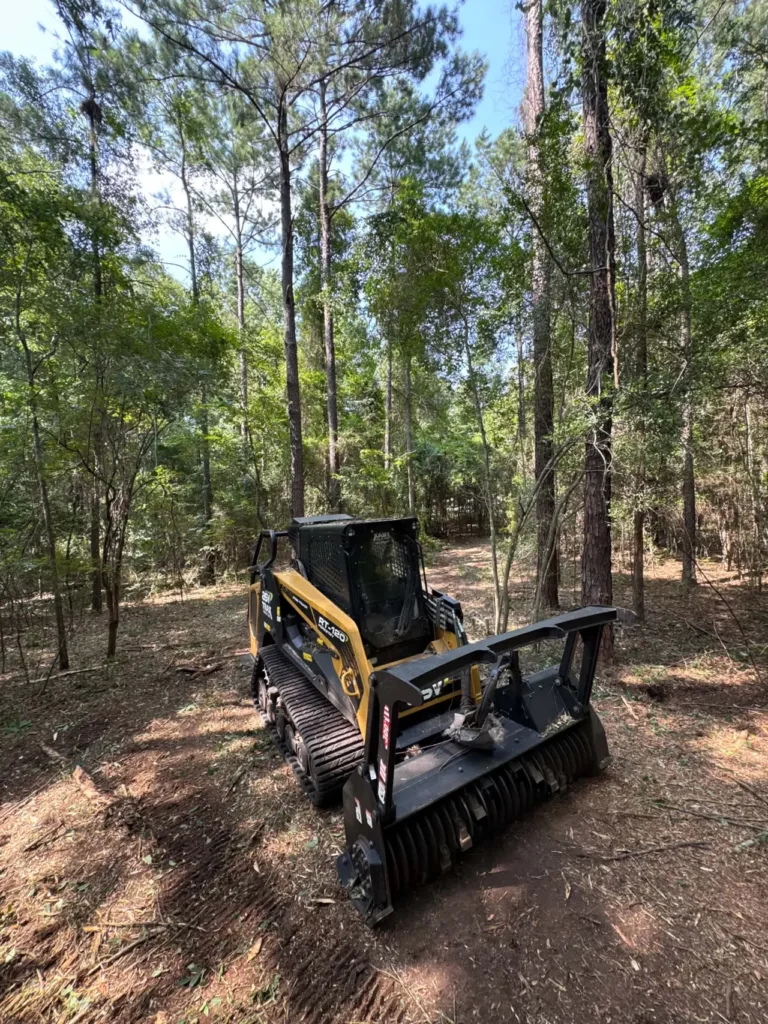
No, and we won’t tell you otherwise. Privet stump-sprouts. Mechanical removal takes out the standing growth and makes the ground usable; keeping it clear needs either a follow-up cutting cycle or a herbicide program from a licensed applicator.
No. Herbicide application is licensed work and we’re not licensed for it. We do the mechanical half and we’re straight about the fact that it’s half.
We can cut it, but mechanical work alone won’t eradicate it and moving equipment through it can spread the rhizomes. Talk to Alabama Extension or the Forestry Commission first, this one is genuinely different from the others.
Twelve to eighteen months for the first follow-up, then it depends on how aggressively you’re treating it. Each pass is cheaper than the last as long as you don’t let it go.
It prices at the heavy end of the per-acre band because the material is dense and slow, not because it’s a specialist service.
Call and you get John Williams, not an answering service and not a dispatcher. If it’s after hours or a Sunday, send the form and you’ll have a text back and a callback first thing.