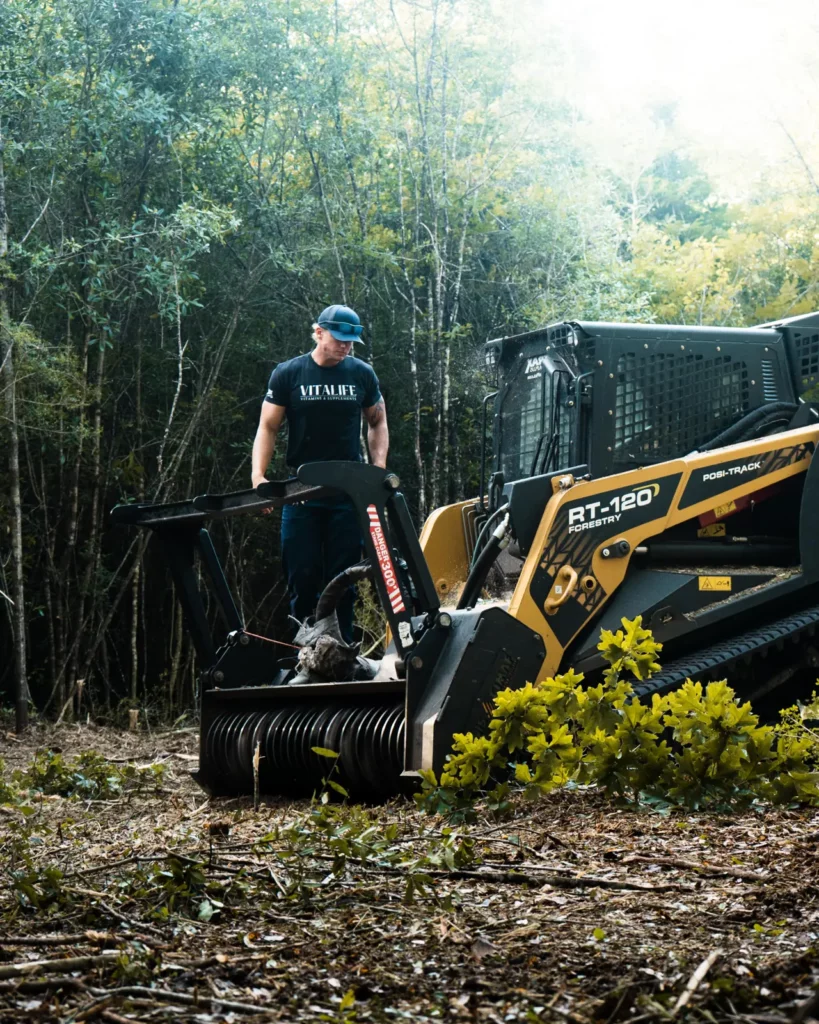
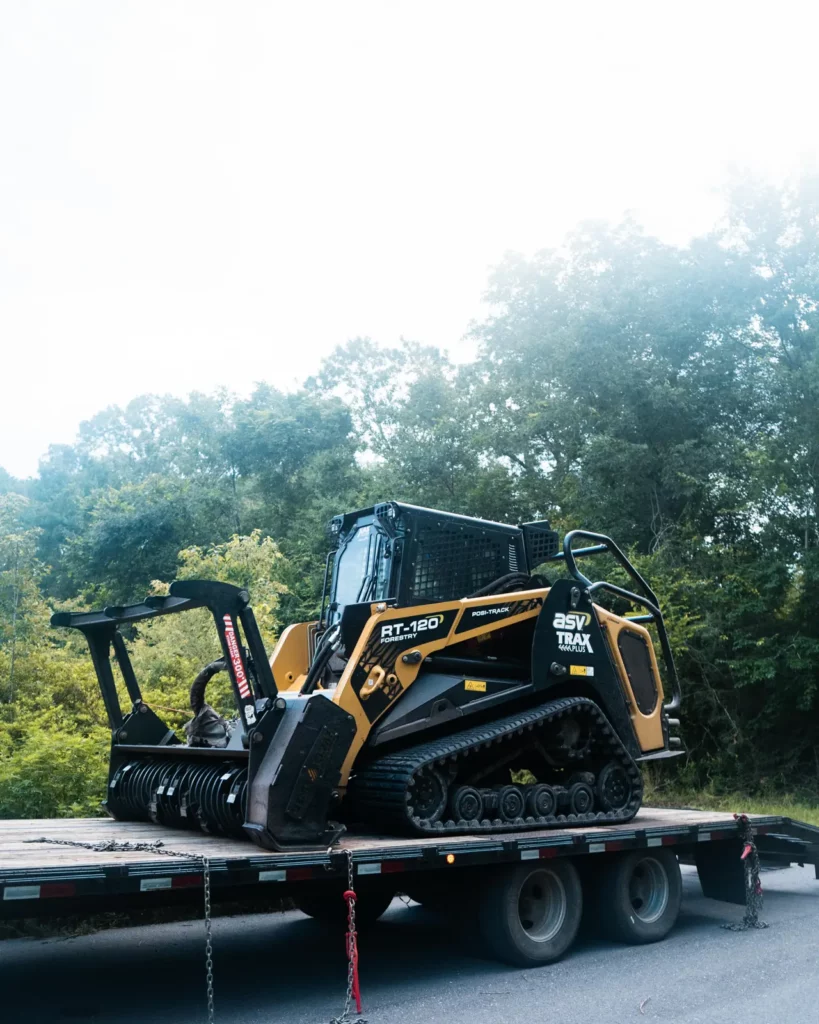
One page, four lines, and a start date. Here’s exactly what’s on it and what would have to happen for the number to move.
Because the most common bad experience in this trade is a number that grows. Somebody quotes low over the phone, starts the job, and then finds reasons. By the time you know, the machine is on your property and your leverage is gone.
So here is precisely what we put on paper before anything starts.

Demolition. Installation of anything. Stump grinding. Debris haul-off. Ditching, drainage or culverts. An engineered pad with compaction testing. Herbicide. If your job needs one of those, you need a second contractor and we’ll say so at the site visit rather than after.
You decide you want another acre, or you want the stumps out after all, or you want it windrowed rather than mulched. Perfectly normal. We price it and you approve it before we do it.
Buried concrete. An old fill pit full of debris. A septic field nobody knew was there. Fence wire buried through the work area. These are rare and they are real. If we hit one, we stop, we call you, and we tell you what it changes and what your options are, before we spend another dollar of your money.
That’s the whole list. Not ‘unforeseen conditions’ as a catch-all, two specific circumstances, both of which put you back in control before anything happens. The full guarantee terms are published.
We don’t take a deposit before you’ve seen and accepted a written price. A 30% deposit is typical, and where it applies it’s stated on the quote rather than sprung on you. Deposit and cancellation terms.
Thirty days as standard. Beyond that we may need to re-look, mostly because vegetation grows and a parcel quoted in March is a different parcel in July.
Call and you get John Williams, not an answering service and not a dispatcher. If it’s after hours or a Sunday, send the form and you’ll have a text back and a callback first thing.