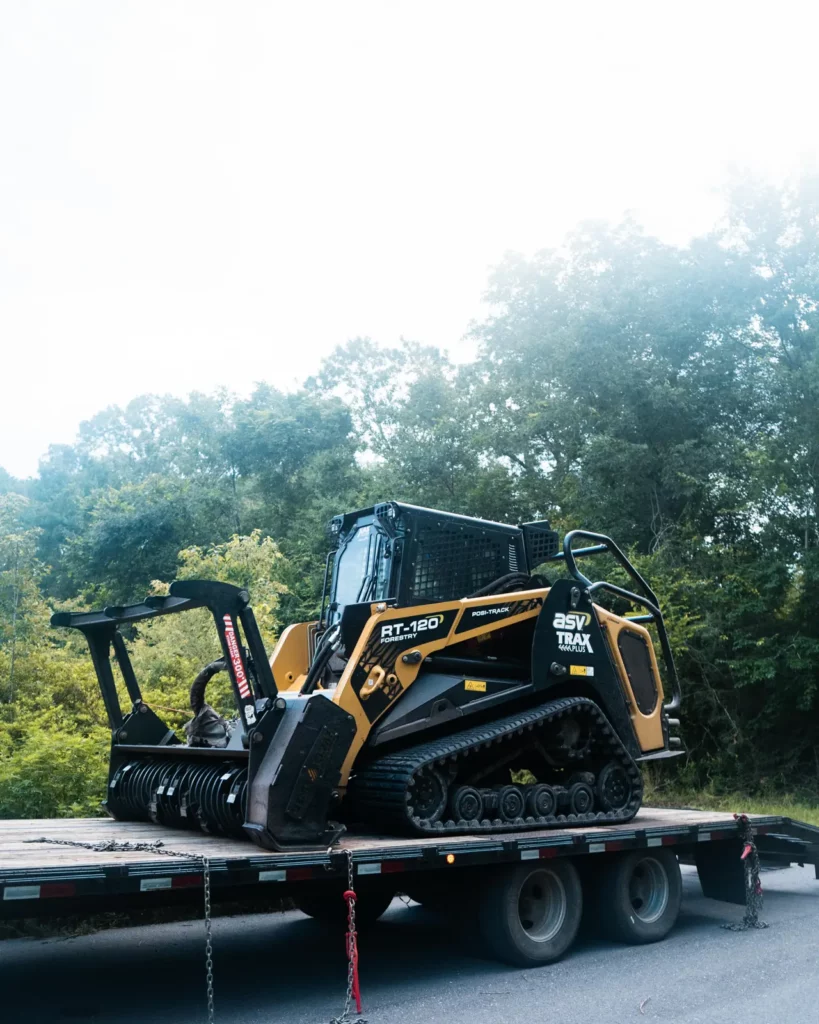
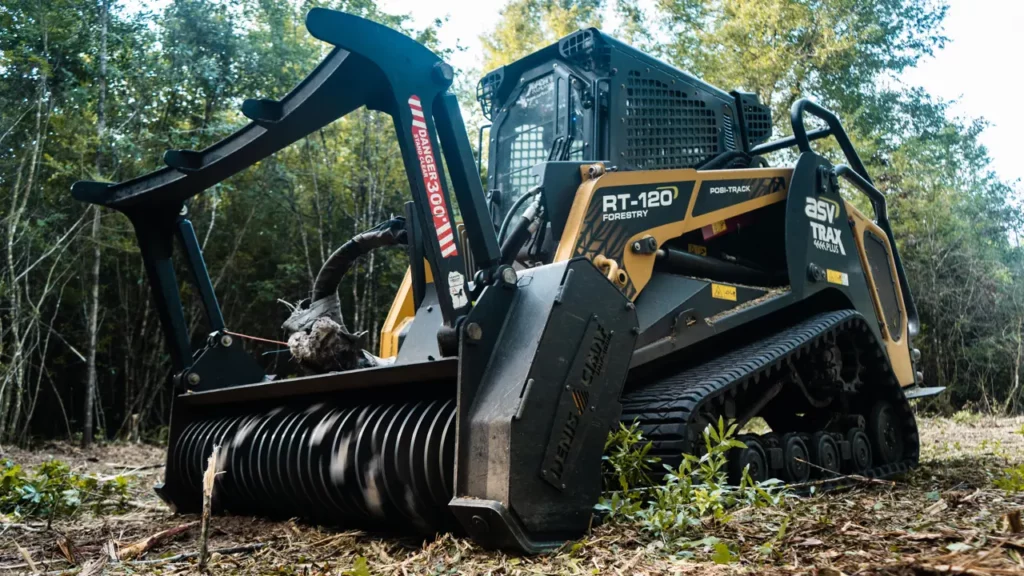
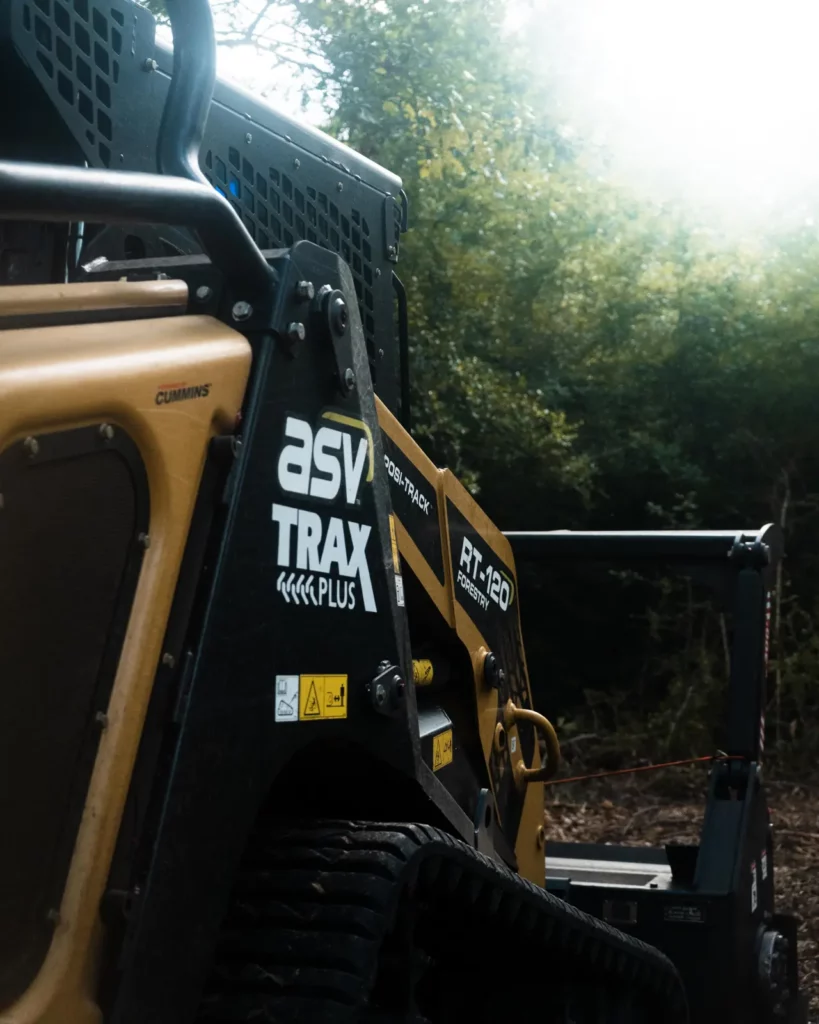
Utility corridors, access easements and pipeline rights-of-way kept open to spec, cleared once or maintained on a cycle.
A right-of-way job is defined by a document: an easement, a utility standard, a lease. The width, the clearance height, what may be left standing and what may not are all written down somewhere, and the job is to meet that specification, not to make a judgement about it.
So send us the spec. If there’s a width, a clearance requirement, an approved method or a restriction on herbicide or on burning, we work to it and we document that we did.

Access easements to landlocked parcels, wells, towers and equipment.
overhead line clearance and ground-level corridor maintenance.
Pipeline right-of-way maintenance mowing and re-clearing.
Private road and lease road corridors, including on timberland.
Drainage and ditch easements where the bank has grown up.
We’re an owner-operator outfit. We’re a good fit for corridor work measured in hundreds or a few thousand feet, for maintenance cycles, and for subcontract sections on a larger project. We are not the right contractor for a multi-crew transmission corridor across three counties, and we’ll tell you that on the first call rather than bidding it and letting you find out.
Yes, on sections that suit a single machine. Send the scope and the spec and we’ll tell you honestly whether we’re a fit.
Yes, before mobilisation, with the additional insured endorsement if your contract requires one. Tell us at quote so there’s no delay on the day.
No. We’re a mechanical clearing contractor. If your maintenance program includes a chemical component that’s a licensed applicator’s work.
We flag them and we don’t guess. If a corridor crosses regulated water or wetland, that section needs the appropriate authorisation and the appropriate method before anyone works it.
Call and you get John Williams, not an answering service and not a dispatcher. If it’s after hours or a Sunday, send the form and you’ll have a text back and a callback first thing.